Playwise — responsible gaming players actually use
A ClefDev in-house design study: the deposit limits, session tracking and reality checks every licensed casino ships — rebuilt so the tools that protect players are the ones players can actually find and use.
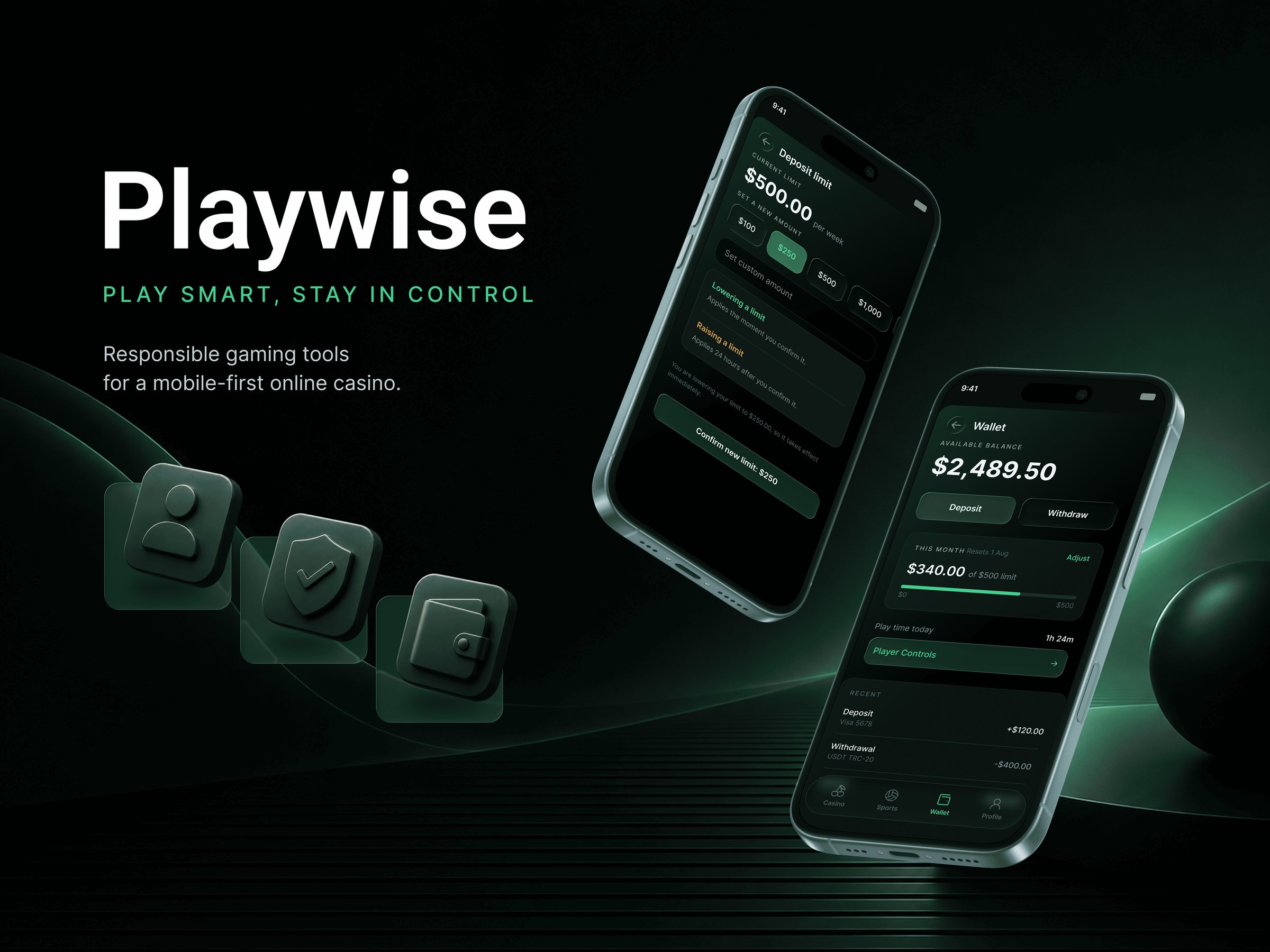
The tools exist. Nobody opens them.
Every licensed online casino ships responsible-gaming controls — deposit limits, loss limits, session timers, reality checks, self-exclusion. Regulators require them; almost no one uses them. Not because players don't care, but because the interface buries the feature, names it in legal language and asks for the key decisions at the wrong moment. Playwise is ClefDev's in-house study of what that toolset looks like when it's designed to be used — where protection is the fast, obvious path instead of a compliance page hidden three menus deep.
The problem
Six patterns that keep the feature closed
We audited how responsible-gaming tools ship across licensed casinos and kept finding the same six failures. The limit lives in account settings, next to language and password — nowhere near the moment money moves. The section is named in legal language ("Responsible Gaming," "Player Protection") instead of what it does. The player can't see their own session — no clock, no running total. The reminder that does appear carries no numbers, just a vague "you've been playing for a while." Between a night that's running too long and full self-exclusion there is a gap — no short break, no cool-off. And limits are configured at the wrong moment, asked for at signup when the player has no answer yet.
The approach
Design the protection to be the fast path
Playwise turns each pattern into a design decision. Put the control where the money is — deposit and loss limits sit on the wallet and cashier screens, not buried in settings. Name it after what it does — "Set a deposit limit," "Take a break," not "Responsible Gaming." Show the session honestly — a live clock and running net figure the player can always see. Make the reminder carry the data — real time played and real net, so the check-in actually means something. Fill the gap with short breaks — 24-hour and 72-hour cool-offs that sit between doing nothing and self-excluding. And ask when the answer exists — surface the limit prompt once a deposit pattern forms, not at a signup screen where it's noise. Lower a limit and it applies instantly; raise it and the change waits 24 hours.
The full argument — all six patterns and the reasoning behind each fix — is written up on our blog: Why nobody opens your responsible gaming tools.
The work
Selected screens
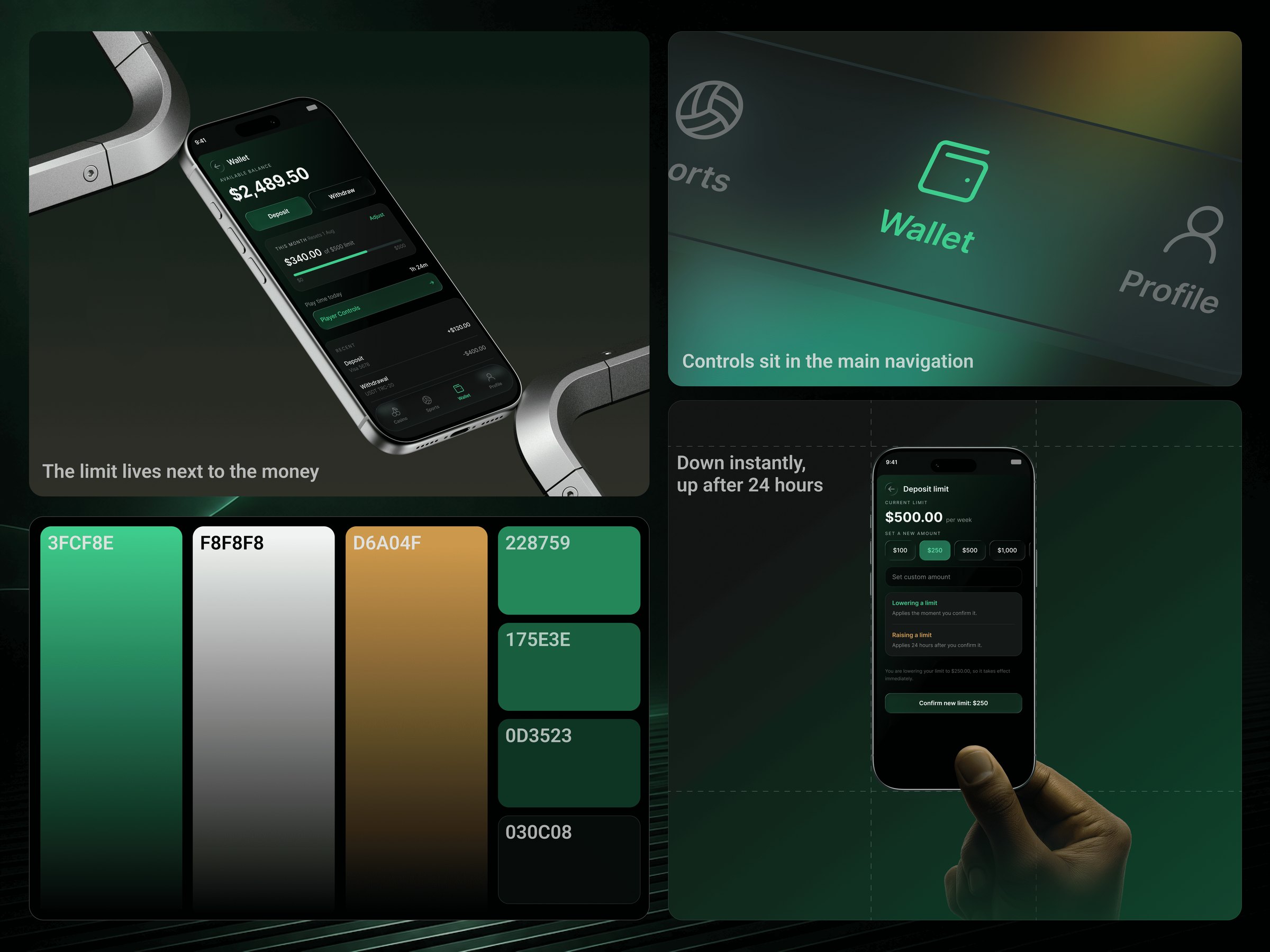 Design system
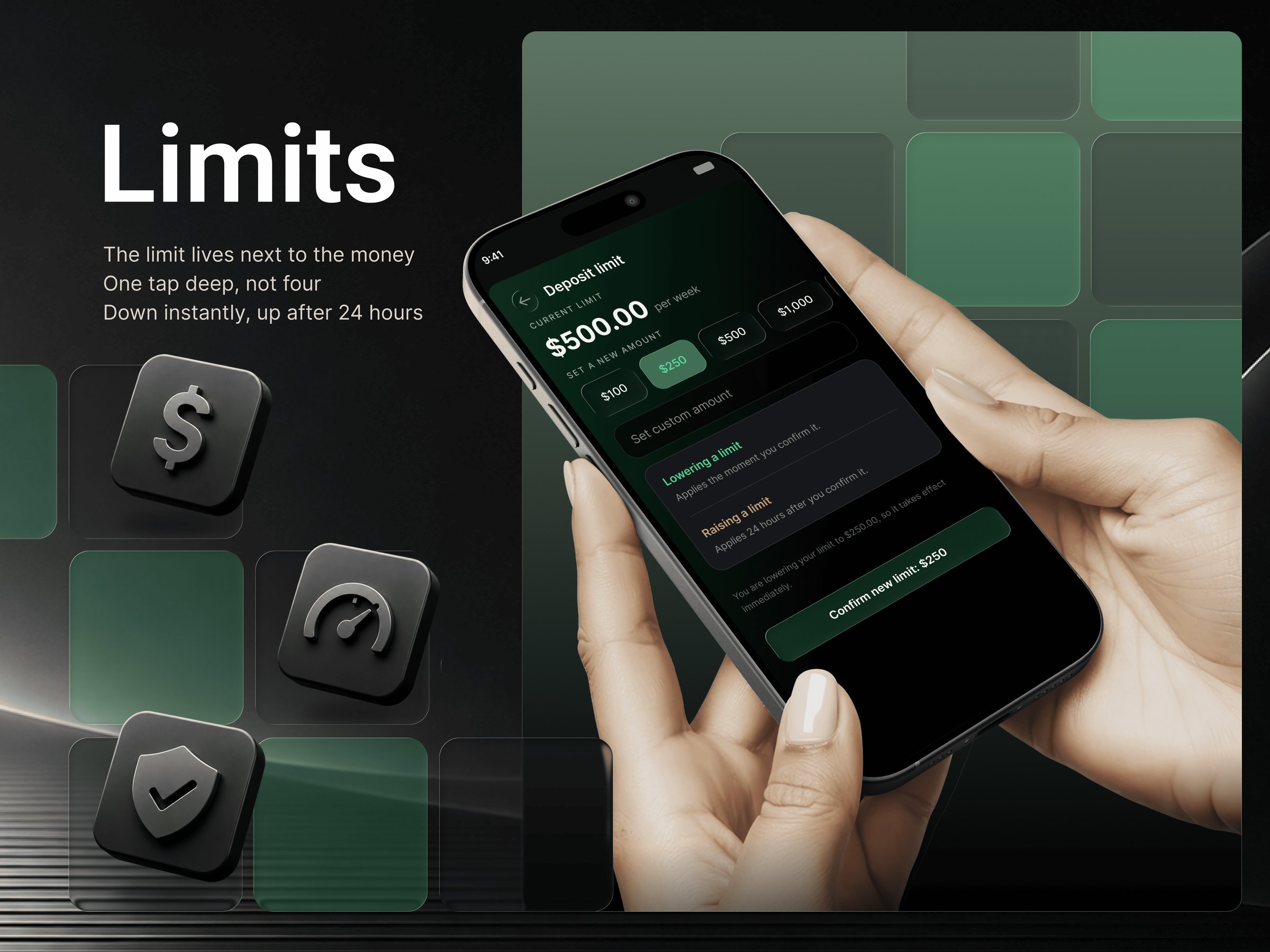 Limits & controls
 Player controls