Case study: a GTA-style AI photo trend for the GTA VI launch
How ClefDev built a GTA-style AI photo trend for Aduarius: two looks, an SEO landing page and a Telegram bot, live before the GTA VI release.

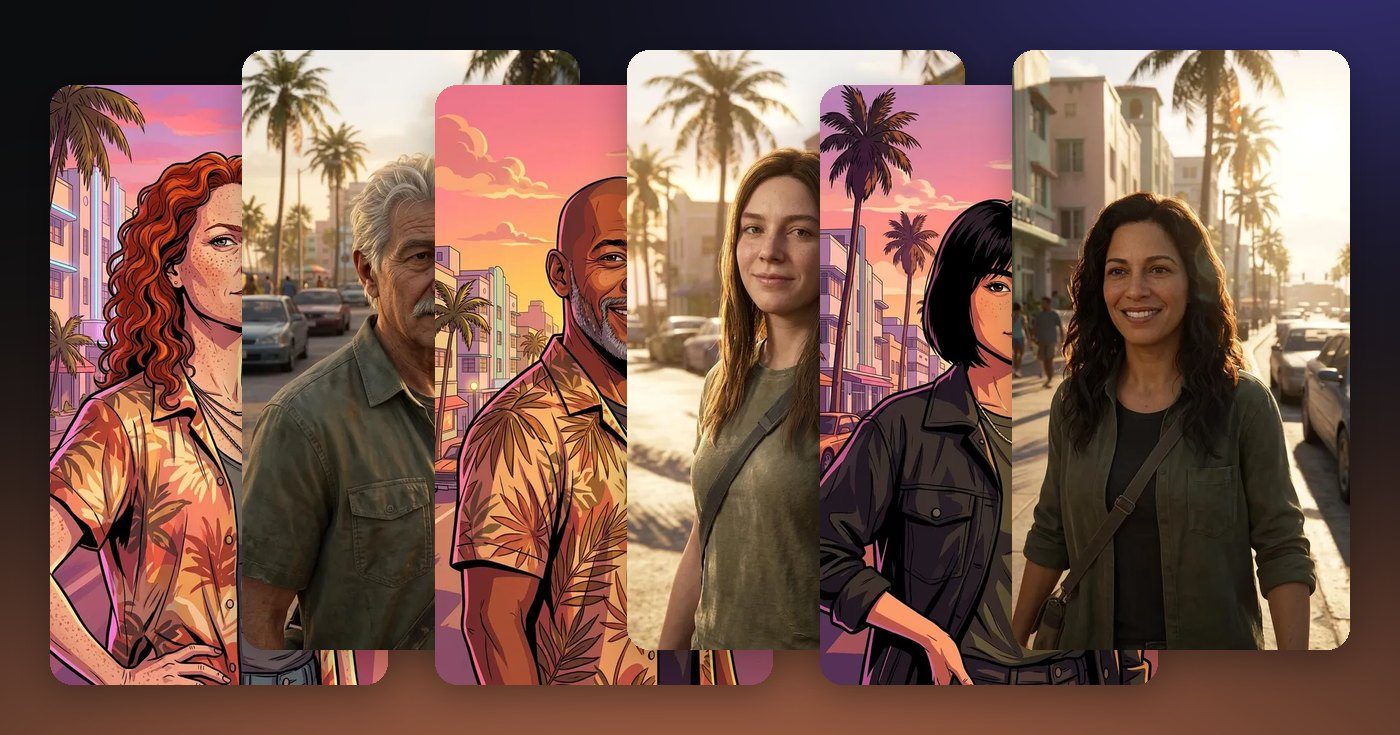
GTA VI came out on November 19, 2026. Ahead of the release, the team behind Aduarius, an AI image product, asked us for a feature that could catch the launch traffic. The result was a photo trend that turns a selfie into a painted game loading screen or an in-game frame, with its own landing page and a Telegram bot. It was live before the game came out.
This is how we scoped it, what we built and what other teams can reuse for their own launch-moment campaigns.
The brief
Aduarius generates images with AI. The owner wanted to reach a mass audience during the release week. People were already searching for "GTA filter" and "GTA 6 AI photo", and short video apps had templates with six-figure usage. The ask had four parts:
- A one-tap photo feature in the GTA style, without breaking trademark rules.
- A landing page that could rank for those searches.
- A Telegram bot, so people could try it without creating an account.
- Sharing that works on phones, because most of the value comes from people posting the result.
The fixed point was the release date. A launch trend that ships after the launch gets a fraction of the traffic.
What we delivered
| Part | What it does |
|---|---|
| Two looks | Loading Screen (a painted poster) and In-game (a frame from a modern open-world game). 9:16 output, one to three people per photo |
| Trends mode | A new section of the product with look cards instead of a prompt field. New looks plug into the same flow |
| Landing page | Examples, how it works, photo tips and an FAQ. FAQPage and WebApplication schema, its own OG image, a clear "not affiliated" note |
| Telegram bot | Takes a photo, asks for a look, sends the picture back. One free picture per look, a daily cap on free use, account linking with the website |
| Share and video | Native share on phones. A short loading-bar video made in the browser, with no extra model cost |
| Admin and analytics | Usage split by source (website or bot) and by look, so the owner can see what works |
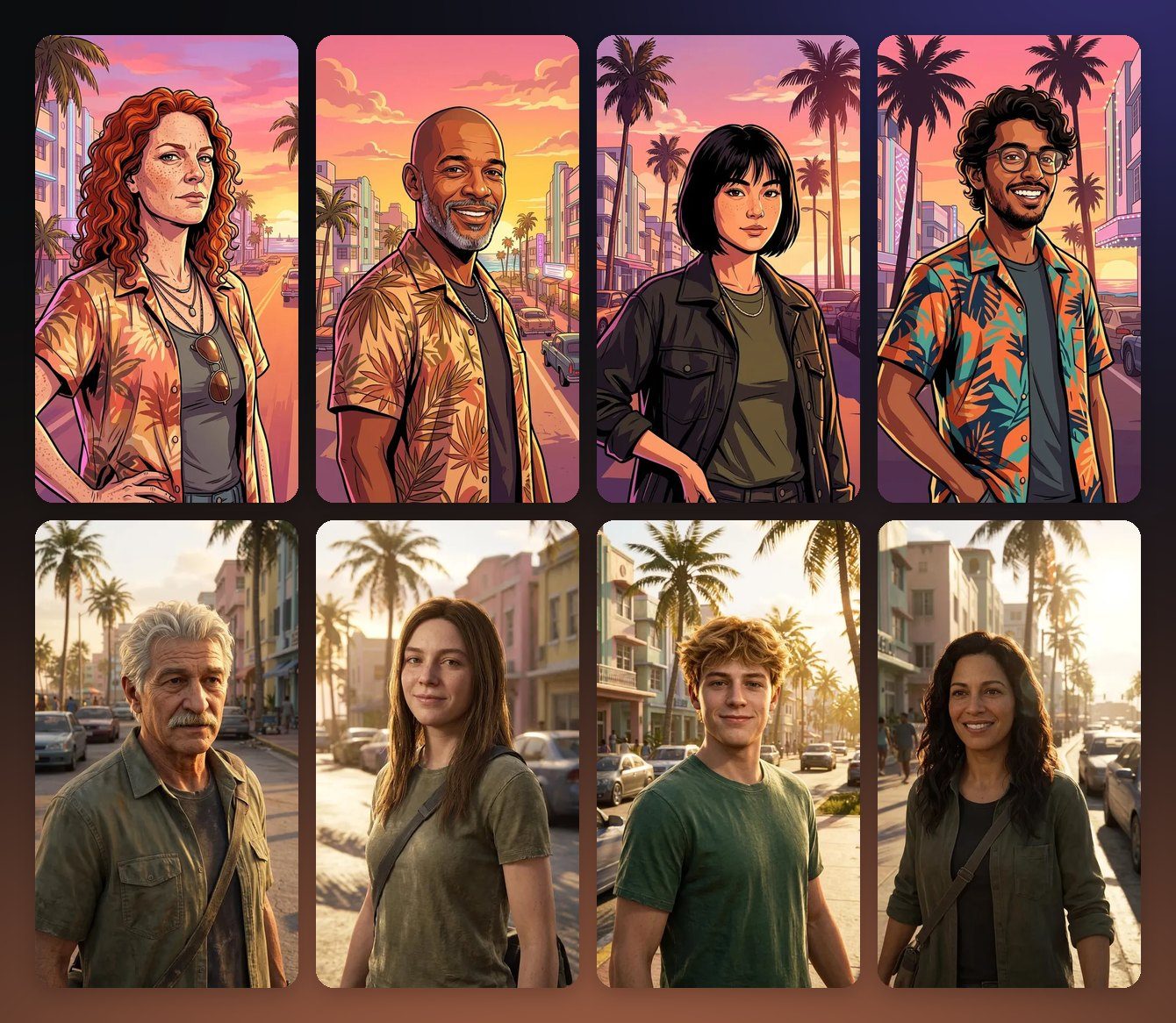
You can see the live result on the Aduarius landing page or try it in the Telegram bot.
How we built it
Research and a written spec. We checked what people were posting, what ranked for the main searches and how the rights holder had treated fan content. The spec listed every screen, prompt rule and limit, so development could start without back-and-forth.
The core build. The Trends mode, both looks, sharing, the browser video and the landing page. Every change went to staging first and to production only after the product owner approved it.
The Telegram bot. The bot, account linking and free-use limits, followed by a QA and security pass.
Group photos. Testers sent group photos, so we added support for up to three people, with a different pose for each person.
The entry point. We changed the landing page so the Telegram bot is the first button. It is the only way in that needs no sign-up, and most visitors come from social media on their phones.
Five choices worth copying for launch-moment campaigns
- Write the spec before the code. A build tied to a release date has no room for questions halfway through. A clear spec with screens, limits and prompt rules saved more time than anything else.
- Remove the prompt. A mass audience does not want to describe a picture. A card with a name and an example is enough.
- Offer a way in without an account. In our case that was a Telegram bot with a free first try. On another project it could be a guest mode or a Telegram Mini App.
- Design for the share. Vertical output, a share button and a short video are what turn one user into several.
- Settle the legal rules before you build. For a game trend that means no logos, no fonts, no characters and no screenshots, plus generated faces for all examples. Take-Two sent a cease and desist letter over GTA 6 AI content in April 2026, so this was not optional.
Under the hood
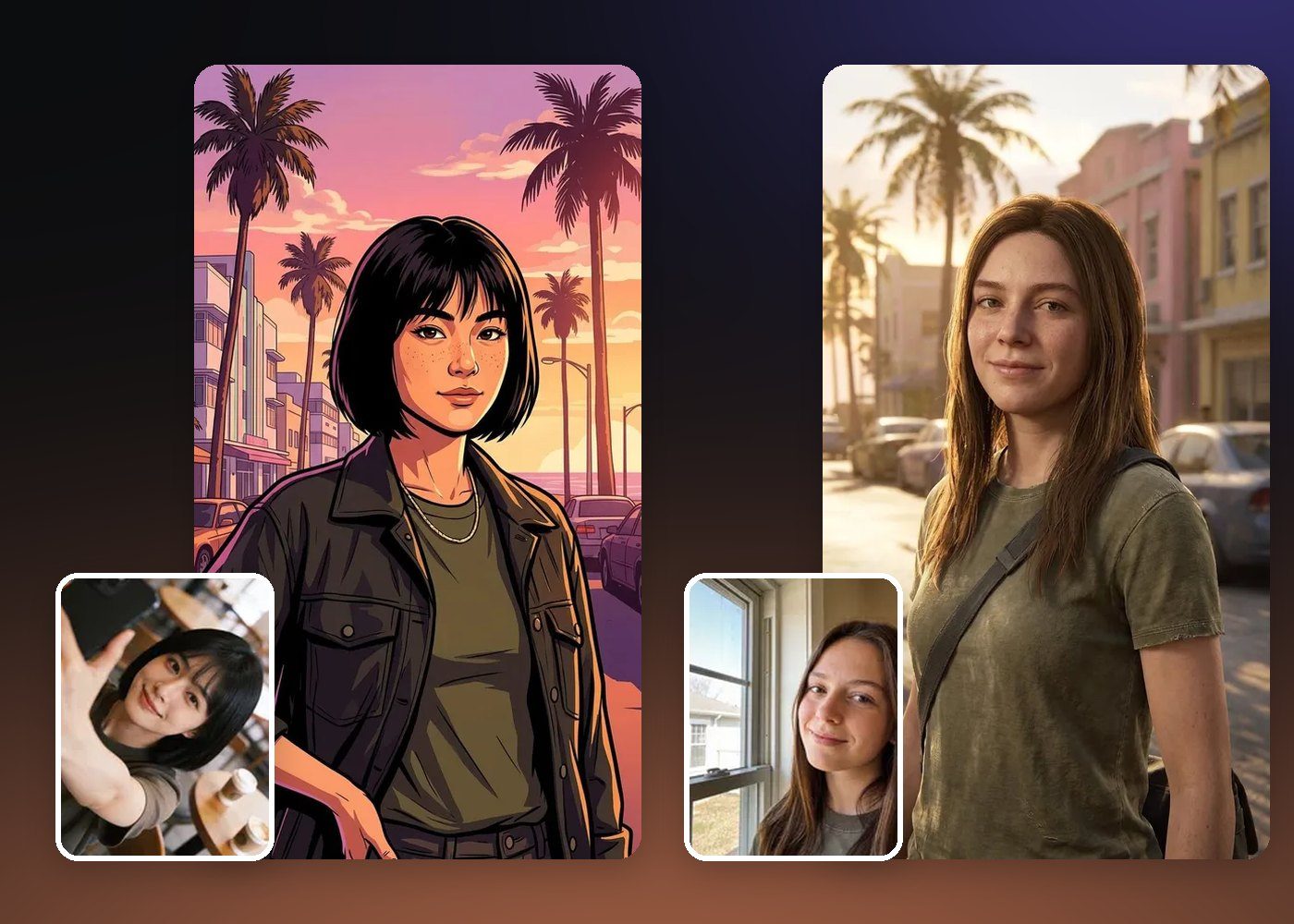
Images are made with Google's Nano Banana 2.1, called through Replicate. The prompts for both looks spell out what must not change: facial features, hair, skin tone, age, glasses and beard. The In-game look uses a waist-up camera angle so the face stays large in the frame. For group photos the prompt keeps the number of people and their order.
The website runs on Astro with server rendering, hosted on Netlify. Data, accounts and storage are in Supabase. Payments for paid use go through Stripe credits that already existed in the product. The bot is a separate Telegram webhook that uses the same generation pipeline and the same credit balance as the website.
Because the Trends mode, the bot and the share flow are generic, the next trend is mostly prompt work and a new landing page.
Where this fits
This project used the same skills we bring to client work: mobile and web apps, landing pages built to rank, Telegram bots and Mini Apps and SaaS products with AI features. If you have a release, an event or a seasonal moment coming up and need something live before it, write to us at design@clefdev.com.
Aduarius is not connected with Rockstar Games or Take-Two Interactive. GTA is a trademark of its owner.
Sources
ClefDev Studio
We are a design studio working with iGaming, Web3 and fintech brands. Notes from the studio are written by the people working on the projects, not by a content team.